



The Hidden Consequences of Living with Multiple Missing Teeth (And How to Reverse Them)
 Here’s the bottom line right away: missing teeth are never only a cosmetic problem. Every month those gaps go untreated, your jawbone shrinks, your remaining teeth drift, your bite collapses, and your face slowly changes shape. The good news? Costa Rica dental implants can stop that chain reaction cold and reverse much of the damage, at a fraction of what you’d pay in the U.S. or Canada.
Sounds dramatic? We wish it were. At our clinic, we meet patients every week who spent years “getting by” with missing teeth, only to discover the true cost of waiting: bone loss, a sunken smile, and a short list of foods they can still chew. In this guide, we walk you through exactly what happens inside your mouth after tooth loss, why dental implants are the only treatment that halts it, and why thousands of North Americans now board a plane to San José, Costa Rica, for full-mouth reconstruction instead of financing a second mortgage back home.
The Domino Effect: What Really Happens After You Lose Multiple Teeth 🎯
Think of your teeth like fence posts holding up a long stretch of fencing. Pull out a few posts, and the fence doesn’t just develop gaps — the whole structure starts leaning, sagging, and pulling on the posts that remain.
Your mouth works the same way. Each tooth supports its neighbors, stimulates the bone beneath it, and carries part of your chewing load. Remove several teeth, and every remaining structure has to compensate. Let’s break down each domino as it falls.
😞 Bone Resorption: Your Jaw Is Quietly Disappearing
 This is the consequence almost nobody warns you about.
Your jawbone stays dense and healthy for one reason: your tooth roots stimulate it every time you bite and chew. That pressure signals your body, “This bone is in use — keep it strong.” Remove the tooth, and the signal goes silent. Your body responds the way it responds to any unused resource: it reabsorbs it.
The numbers are sobering:
- You can lose up to 25% of bone width in the first year after tooth loss
- Bone height continues to shrink year after year
- The longer you wait, the less bone remains to anchor future implants
Here’s the catch: bone loss is invisible from the outside, until it isn’t. Which brings us to the next domino.
😟 Facial Collapse: The “Sunken Look” No One Wants
Your jawbone is the scaffolding of your lower face. As it shrinks, your face loses its support structure, and the changes show up in the mirror:
- Sunken cheeks and hollowed contours
- Thinning lips that fold inward
- A shortened lower face, since your bite height decreases
- Deepening wrinkles around the mouth
- A chin that appears to jut forward
Patients often tell us they “aged ten years” after losing their back teeth, and they’re not exaggerating. Dentists call this facial collapse, and traditional dentures accelerate it rather than prevent it. More on that shortly.
😬 Shifting Teeth and a Collapsing Bite
 Teeth are surprisingly restless. Leave a gap, and the neighboring teeth begin tipping and drifting into the empty space, like books falling sideways on a half-empty shelf. The tooth above or below the gap starts over-erupting — growing out of its socket in search of something to bite against.
The result? A slow-motion pileup:
- Crooked, overlapping teeth that once were straight
- Bite misalignment (malocclusion) that strains your jaw joints
- TMJ pain, headaches, and clicking as your jaw compensates
- Uneven wear that cracks and erodes the teeth, doing double duty
- New gaps and food traps that raise your risk of decay and gum disease
One missing molar can quietly destabilize your entire bite. Several missing teeth? That’s a structural emergency in slow motion.
🥗 Nutritional Decline: When Your Menu Shrinks with Your Bone
 Chewing is the first step of digestion, and it demands a full team of teeth. Patients with multiple missing teeth almost always drift, without noticing, into a softer and less nutritious diet:
- Fresh fruits and raw vegetables get replaced by processed, softer options
- Lean proteins like steak, chicken, and nuts become “too much work”
- Fiber intake drops; sugar and refined carbs creep up
Studies link significant tooth loss to poorer nutrition, digestive issues, and higher risks of chronic conditions. Put simply: your teeth feed the rest of your body. Lose them, and your whole system pays the bill.
😔 The Social and Emotional Toll
Let’s be honest about the part patients rarely say out loud.
Missing teeth change how people smile, speak, laugh, and date. We’ve heard it hundreds of times in consultations:
- “I trained myself to smile with my lips closed.”
- “I stopped ordering what I actually wanted at restaurants.”
- “I avoid photos. Even with my grandkids.”
Speech can suffer too; gaps alter airflow and tongue placement, producing whistles and slurred sounds. The confidence cost compounds over the years, affecting careers, relationships, and mental health. That’s not vanity. That’s quality of life.
Why Dental Implants Are the Only Fix That Stops the Dominoes 🛑
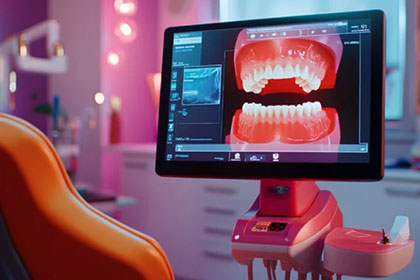 So, what’s the actual solution? You have three broad options — and they are not created equal.
Traditional dentures rest on your gums. They restore appearance, but they deliver zero stimulation to your jawbone. Worse, the constant pressure on the gum ridge speeds up bone loss. That’s why dentures need relining every few years — the foundation underneath keeps shrinking.
Dental bridges grind down healthy neighboring teeth to serve as anchors, and the bone under the missing tooth still receives no stimulation.
Dental implants are different at the biological level. A titanium post is placed directly into your jawbone, where it fuses with the bone through a process called osseointegration. From that moment on, every bite sends the same “keep this bone strong” signal your natural root once did.
Here’s what that means for you:
- ✅ Bone loss stops at the implant site — the only treatment that achieves this
- ✅ Full chewing strength returns (implants restore roughly 90%+ of natural bite force; dentures manage 20–25%)
- ✅ Nothing slips, clicks, or floats — implants are fixed in place
- ✅ Facial structure is preserved, keeping your profile and bite height intact
- ✅ Decades of service with proper care, versus the 5–10 year replacement cycle of dentures
🚀 Lost Most or All of Your Teeth? Meet All-on-4 and Full Mouth Reconstruction
 If you’re missing many or all teeth in an arch, you don’t need one implant per tooth. Modern protocols like All-on-4 secure a complete arch of fixed teeth on just four strategically angled implants — often even in patients who were told they “don’t have enough bone.”
For patients with a mix of failing teeth, decay, gum disease, and missing teeth, Costa Rica full mouth reconstruction combines implants, crowns, and restorations into one coordinated treatment plan. Instead of patching problems one by one over a decade, you rebuild the entire system — bite, bone, function, and smile — in a matter of days, not years.
Why Costa Rica Is the Smart Choice for Dental Implants in 2026 ✈️🇨🇷
Now for the question we hear most: “If implants are so life-changing, why do so few people get them?” One word: price. In the U.S., a single implant runs $3,500–$6,000. Full mouth cases regularly quote at $50,000–$90,000. For most families, that’s simply out of reach.
This is where Costa Rica dental tourism rewrites the math.
💰 Save 50–70% Without Sacrificing Quality
The same procedures, performed with the same implant brands and materials, cost 50–70% less in Costa Rica. The savings come from lower operating costs and a favorable exchange rate, never from cutting corners. Many patients cover flights, a beachside recovery, and their entire treatment for less than the price of the procedure alone back home.
🎓 Specialist-Level Care with International Standards
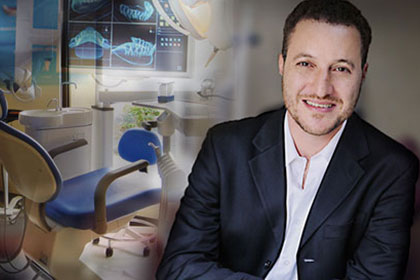 Costa Rica has spent decades building a reputation as the premier dental destination in the Americas. Leading clinics like Flikier Dental Institute are staffed by U.S.-trained specialists, like Dr Simon Flikier, who follow international sterilization protocols and treat thousands of American and Canadian patients every year.
Hunt for clinics that offer:
- Photogrammetry scanning — precision digital capture of your implant positions, accurate to microns, for prosthetics that fit right the first time
- In-house CAD/CAM milling — your restorations are designed and fabricated on-site, cutting wait times and third-party errors
- Same-day protocols — walk in with failing teeth, walk out with a fixed provisional smile in a single visit
- International patient coordination — bilingual teams that handle scheduling, transport, lodging recommendations, and follow-up so you can focus on healing
🌴 Recover in Paradise, Not in Traffic
 There’s a reason patients describe their treatment trip as “the best dental decision I ever made.” Between appointments, you’re recovering in one of the happiest, safest, most naturally stunning countries on Earth — rainforests, volcanoes, and Pacific sunsets included. Compare that to a waiting room in a strip mall.
Frequently Asked Questions ❓
How long do I need to stay in Costa Rica for dental implants? Most implant cases require one visit of 5–8 days for placement, and a second visit a few months later for the final restoration. Same-day full-arch protocols let many patients leave their first trip with fixed provisional teeth already in place.
Am I a candidate if I’ve been told I don’t have enough bone? Quite possibly, yes. Angled implant techniques like All-on-4, along with bone grafting options, allow specialists to treat many patients who were previously turned away. Always get a second opinion before accepting “you’re stuck with dentures” as final.
Are Costa Rica dental implants safe? At accredited clinics, absolutely. Top Costa Rican clinics use the same FDA-approved implant systems found in the U.S., and their specialists often hold international training and certifications. Vet the clinic’s credentials, technology, and patient reviews — then book with confidence.
How much can I save on full mouth reconstruction in Costa Rica? Savings typically range from 50% to 70% compared to U.S. and Canadian pricing. A full mouth case quoted at $70,000 at home is often completed for $20,000–$30,000 in Costa Rica, including premium materials.
The Takeaway: Stop the Dominoes Before They Finish Falling 🏁
 Missing teeth are a progressive condition, and the clock is always running. Bone keeps shrinking, teeth keep shifting, and treatment only gets more complex and more expensive the longer you wait. Dental implants remain the single treatment that halts bone loss, restores full function, and protects your facial structure for decades.
And you no longer have to choose between your health and your savings. With world-class specialists, precision technology like photogrammetry and in-house CAD/CAM milling, and prices 50–70% below U.S. rates, Costa Rica dental implants put a permanent solution within reach.
Ready to find out what’s possible for your smile?
Schedule a consultation at Flikier Dental Institute, get your personalized treatment plan, and take the first step. Your future self will thank you every time you bite into something delicious.✨
 Or Call Toll Free 1-866-638-1102


 If your file is bigger than 20 Megs you can use our Dropbox account.
