



Am I a Candidate for Dental Implants? 7 Questions to Ask Before Choosing Treatment in Costa Rica
 Here’s the answer most patients never hear up front: yes, you are almost certainly a candidate for Costa Rica dental implants, even with bone loss, gum disease, diabetes, a smoking habit, or a previous implant that failed. Candidacy is rarely a yes-or-no verdict. It’s a diagnosis. And the clinics that get it right are the ones that measure before they promise.
Maybe a dentist back home already told you “no.” Maybe you’ve spent months bouncing between conflicting opinions, price quotes that read like ransom notes, and vague warnings about your jawbone. Every month you wait, that bone keeps shrinking; missing teeth accelerate bone loss the way an empty house invites decay. The fix isn’t more guessing. It’s precise answers to seven specific questions.
We’re going to walk you through each one, show you exactly what disqualifies a patient (spoiler: very little), and explain how our diagnostic process at Flikier Dental Institute turns uncertainty into a treatment plan.
Ask these seven questions before you book anything, anywhere.
❓1. Do I Have Enough Bone for Dental Implants?
 This is the big one. Implants are like fence posts — they need solid ground to hold. When teeth go missing, the jawbone beneath them starts to resorb, and patients who’ve worn dentures for years often arrive convinced their case is hopeless.
Here’s what actually matters: how much bone remains, where it remains, and what quality it is. A 2D X-ray from a general dentist can’t tell you that. A 3D CBCT scan can — down to fractions of a millimeter.
And even significant bone loss has solutions:
- Bone grafting rebuilds volume before implant placement.
- Zygomatic implants anchor into the cheekbone, bypassing the jaw entirely in extreme cases.
- Costa Rica All-on-4 treatment places four strategically angled implants in the densest available bone — often eliminating the need for grafting altogether.
So the honest answer to “do I have enough bone?” is almost always: let’s measure and find out. Never accept a rejection based on a flat X-ray and a shrug.
😬 2. Are My Gums Healthy Enough to Support Implants?
Think of your gums as the soil around those fence posts. Healthy soil, stable fence. Active periodontal disease, on the other hand, is the number one threat to long-term implant success — the same bacteria that destroyed your natural teeth will happily attack an implant.
Does gum disease disqualify you? No. It sequences your treatment. Periodontal therapy comes first, implants second. At our clinic, we treat and stabilize gum health before a single implant is placed, since skipping that step is how implants fail two years down the road.
Ask any clinic you’re considering: “How do you evaluate and treat my gum health before surgery?” A clinic that shrugs off this question is telling you everything you need to know. Walk away.
🚬 3. I’m a Smoker — Am I Automatically Disqualified?
 Short answer: no. Longer answer: smoking reduces blood flow to healing tissue, which raises the risk of implant failure. Sounds scary, right? Here’s the context — studies still show high success rates for smokers, just a few percentage points below non-smokers.
What responsible clinics do:
- Give you the real numbers, not a lecture.
- Recommend a smoking pause — typically one week before surgery and eight weeks after, during the critical healing window.
- Plan around the risk with implant placement in denser bone and closer follow-up.
We’ve restored the smiles of hundreds of smokers. What we won’t do is pretend the risk doesn’t exist. You deserve a clinic that treats you like an adult: honest data, clear protocols, your decision.
😔 4. Can I Get Implants If I Have Diabetes?
 This question keeps more patients on the fence than almost any other — and the fear is outdated. The research is clear: patients with well-controlled diabetes achieve implant success rates comparable to non-diabetic patients. The keyword is: controlled.
What we look at:
- Your HbA1c level. Below 7% is ideal; below 8% is workable with precautions.
- Your healing history. How do cuts and dental work typically heal for you?
- Your medication routine. Coordination with your physician keeps surgery day uneventful.
Uncontrolled diabetes slows healing and raises infection risk; that’s a real concern, and we’ll say so plainly. But “I’m diabetic” and “I can’t get implants” are two very different sentences.
Bring your recent bloodwork to your evaluation and let the numbers do the talking.
❌ 5. My Implants Failed Before — Is a Second Attempt Worth It?
 A failed implant feels personal. It isn’t. Implants fail for identifiable, fixable reasons: infection, insufficient bone at the placement site, poor implant positioning, premature loading, or an undiagnosed bite problem grinding the implant loose at night.
A previous failure is data, not destiny. The question isn’t whether it failed — it’s why. That’s a forensic exercise:
- 3D imaging reveals what the original surgeon was working with.
- Bite analysis exposes force problems that doom implants silently.
- Site evaluation determines what healing or grafting the area needs before round two.
Patients fly to us for Costa Rica Full Mouth Reconstruction precisely after failures elsewhere, and second-attempt success rates are excellent when the original cause gets diagnosed and corrected. Hunt for a clinic that wants to study your failure, not just replace your hardware.
😁 6. Which Treatment Actually Fits Me — Single Implants, All-on-4, or Full Mouth Reconstruction?
 Here’s where marketing muddies the water. Every clinic has a favorite procedure to sell. Your anatomy doesn’t care about their favorite procedure.
The honest breakdown:
- Single or multiple implants fit patients missing individual teeth with healthy neighbors. Precise, conservative, permanent.
- Costa Rica All-on-4 fits patients losing (or who have lost) most teeth in an arch. Four implants support a full fixed bridge — often placed and loaded the same day.
- Costa Rica Full Mouth Reconstruction fits patients with combined problems: failing teeth, bite collapse, worn enamel, TMJ strain. It rebuilds function and aesthetics across both arches, combining implants, crowns, and bite correction into one coordinated plan.
So, what’s the bottom line? The right treatment is the one your diagnostics point to, never the one on the billboard. If a clinic quotes you a full-arch price before seeing a 3D scan, they’re selling a product, not planning your care.
🔬 7. How Will the Clinic Actually Confirm I’m a Candidate?
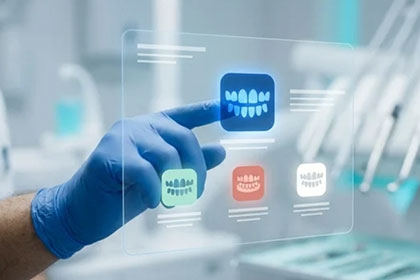 This is the question that separates world-class care from vacation-package dentistry, and it’s where we’ll speak directly about how we work at Flikier Dental Institute, home to some of the best cosmetic dentistry in Costa Rica.
Guesswork is the enemy of implant success. Our answer to guesswork:
- Photogrammetry scanning captures implant positions with digital precision that traditional impressions can’t touch. Think of it as GPS for your mouth versus a hand-drawn map.
- 3D CBCT imaging maps your bone volume, density, and nerve positions before anyone touches an instrument.
- In-house CAD/CAM milling means your restorations are engineered, adjusted, and fabricated under one roof — no shipping delays, no third-party labs, no compromises on fit.
- Same-day capability lets qualified patients walk out with a fixed provisional smile on surgery day.
- Bilingual patient coordination handles your records, travel planning, and physician communication in fluent English, from first call to final follow-up.
Every “am I a candidate?” question in this article — bone, gums, smoking, diabetes, prior failures — gets answered with measurements, not opinions. That’s the standard. Demand it everywhere you inquire.
💬 Why Patients Choose Costa Rica for This Decision

Beyond candidacy, there’s the practical question: why are tens of thousands of U.S. and Canadian patients choosing Costa Rica dental implants each year?
- Savings of 50–70% compared to U.S. pricing — on identical implant brands and materials.
- Board-certified specialists with international training and high case volumes.
- One location, one team for diagnostics, surgery, and restoration — a level of integration many patients never find at home.
- Recovery in paradise. Healing with a view of the Central Valley beats healing in a waiting room.
Lower cost never has to mean lower standards.
It means lower overhead, and a healthcare system that has quietly become one of the strongest in Latin America.
✅ Stop Wondering. Start Measuring.
 You’ve now got the seven questions that matter: bone volume, gum health, smoking, diabetes, prior failures, treatment fit, and — above all — diagnostic method. Notice the pattern? None of them get answered by a phone quote or a hunch. They get answered by data.
Here’s your next step, and it costs nothing: request a free evaluation with Flikier Dental Institute. Send us your records, or let us capture new 3D imaging when you arrive.
We’ll tell you, with numbers, scans, and a written plan, exactly what your candidacy looks like and which treatment fits your case. No pressure, no sales script, no guesswork.
Your smile has waited long enough. Book your free evaluation today and get the answer you’ve been circling for months.
 Or Call Toll Free 1-866-638-1102


 If your file is bigger than 20 Megs you can use our Dropbox account.
